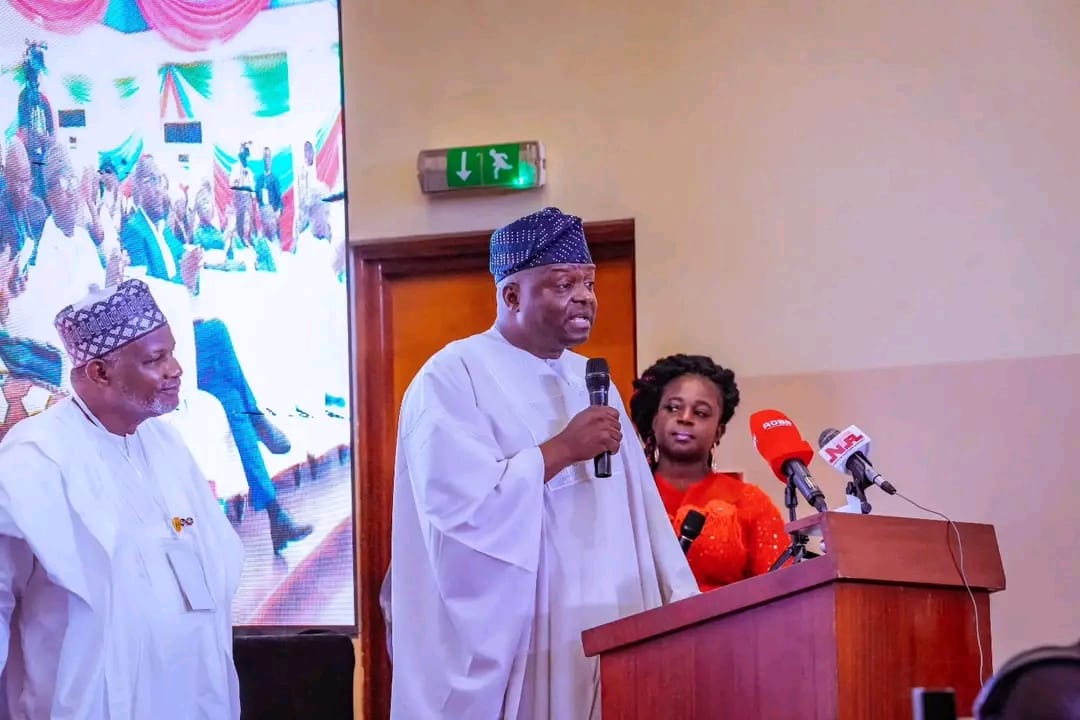

Abuja — The National Chairman of the All Progressives Congress (APC), Prof. Nentawe Yilwatda, has represented President Bola Ahmed Tinubu at the Second Edition of the Asiwaju Scorecard Series/Asiwaju Policy Roundtable, where he highlighted the administration’s economic reforms and its ambition to build a $1 trillion Nigerian economy by 2030.
Yilwatda, while delivering the President’s message at the event, conveyed Tinubu’s appreciation for the opportunity to engage Nigerians on the country’s economic transformation and the measures being taken to move Nigeria from economic uncertainty to stability, growth and ultimately prosperity.
He highlighted what he described as key progress recorded under the Tinubu administration, including stronger external reserves, increased non-oil revenue, improved trade performance, sustained GDP growth and a moderation in inflation.
According to him, while macroeconomic stability remains important, it should be viewed as a foundation for delivering tangible improvements in the lives of Nigerians, including lower food prices, more jobs, affordable credit, reliable electricity and stronger purchasing power.
The APC National Chairman also emphasised that President Tinubu’s $1 trillion economy target by 2030 should not be regarded merely as an economic figure but as a national development mission aimed at making Nigeria more productive, competitive and prosperous.
He outlined the importance of strategic infrastructure, including highways, railways, deep-sea ports, energy infrastructure and digital connectivity, to link Nigeria’s production centres with domestic and international markets.
Yilwatda further highlighted the administration’s five-port maritime vision, road and rail corridors, industrial parks, agro-processing zones, logistics hubs and manufacturing clusters as critical components of an economic architecture capable of driving production, employment, exports and investment.
He also identified the AKK gas pipeline and investments in young Nigerians through education, skills development, digital training and responsible access to credit as important elements of the broader economic transformation agenda.
As the country approaches the 2027 general elections, Prof. Yilwatda said Nigerians would be faced with a choice between progress and retreat, productivity and stagnation, and investment and isolation.
He maintained that the foundation for economic transformation had been laid under President Tinubu and called for sustained efforts to translate reforms into measurable results, growth and improved prosperity for Nigerians.
He concluded that the administration’s broader objective was to move the country “from reform to results, from results to growth, from growth to prosperity, and from prosperity to a $1 trillion economy.”
PROF NENTAWE REPRESENTS TINUBU AT ASIWAJU SCORECARD SERIES, HIGHLIGHTS ECONOMIC REFORMS AND $1TRN TARGET